

Business schools love promising critical thinking. We sprinkle it over every syllabus, course description and graduate profile like salt and pepper. Strategy? Critical thinking. Marketing? Critical thinking. Give us another page in the brochure and we’ll probably add it to the cafeteria menu.
I wish it worked that way.
I spend much of my teaching asking students to challenge assumptions, including mine. But challenging something and knowing enough to challenge it intelligently are two different achievements. Anyone can be sceptical. To question something usefully, you need something to think with.
In one of my Lean Startup courses, I send students into the narrow streets of Old Nice to study the final stretch of a delivery. They look for drivers waiting, businesses improvising and small frustrations everyone has learned to live with. Back in class, they separate what they saw from what they assumed, then identify the one assumption that could sink their proposed solution. What would they need to learn before declaring themselves right?
A beautiful slide deck won’t answer that, although I’ve seen enough of them to wallpaper a small château!
Cognitive scientist Daniel Willingham has explained why this matters. Some habits of reasoning travel between subjects. But good judgement depends on knowing something about the world you’re examining. Knowing you should question evidence is useful. Knowing which evidence matters takes more work.
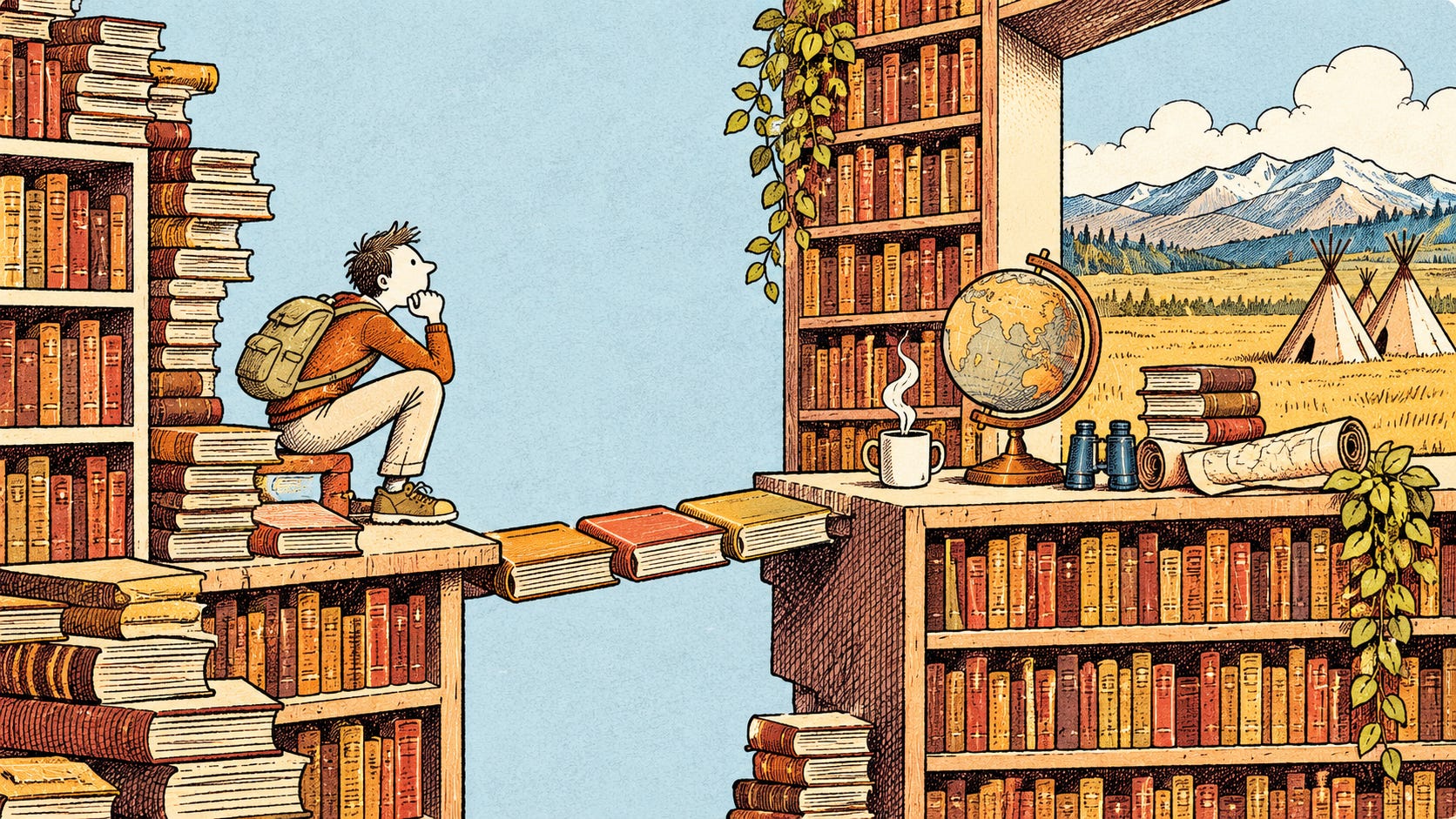
I learned that in a much less comfortable way when I was young. I befriended a Native American man during a long military selection process and later spent a couple of months with him on the Crow Reservation in Montana.
I arrived carrying embarrassing assumptions about his people, their history and their lives. I’d heard military cadre describe Native Americans as somehow lesser, even comparing their ability to live off the land to animal instinct. Living with my friend and his community for a few months overturned that picture. I discovered a culture, a relationship with nature and a way of seeing the world I had barely understood. But the deepest shock came when I learned how they saw people like me. They had been observing us, too. The hardest part wasn’t admitting how wrong I’d been about them. It was wondering how right they might be about us.
No classroom exercise could recreate those months, and I wouldn’t pretend otherwise. But they taught me something I try to pass on: when someone sees the world differently, your first job isn’t to find the flaw in their argument. It’s to discover what they know that you don’t.
When students defend an idea, I ask whom they’ve listened to, what they’ve tested and what would change their minds. Sometimes it means abandoning an idea they love. Sometimes it means admitting they haven’t understood the problem yet. I want them to question me. I also want them to be willing to discover that they, or I, might be wrong.
It’s easy to challenge someone else’s view. The real education begins when you allow theirs to challenge yours.
Beautiful story Andrew.
My takeaway (as always) is that we must each establish our own beliefs via our own life experiences.