

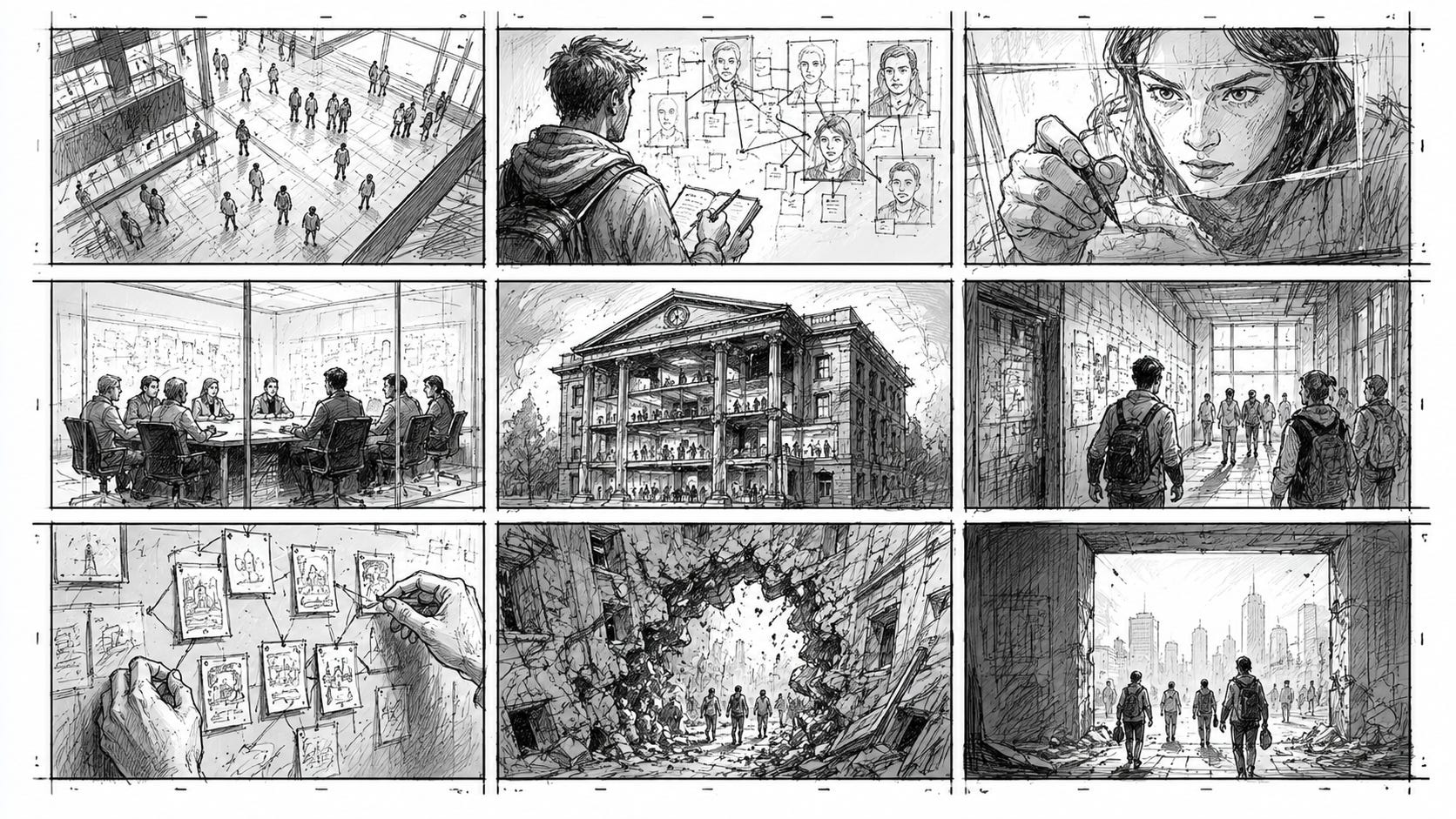
Every business school claims to teach innovation.
Then it sends students to study someone else’s.
We analyse Apple, IKEA, Netflix, and organisations students have never entered. Meanwhile, they spend one or two years inside a complex institution making decisions about pricing, programmes, admissions, technology, partnerships, rankings, customer experience, and market positioning which is precisely what innovation is about.
I’ve started wondering whether the richest business case in the building is not sitting in the library. It is the building itself. Yet we spend hours teaching students how organisations innovate while barely inviting them to observe the organisation they are already part of.
I already do this with my own teaching. I take students back through the history of my courses. I show them what I changed, what I removed, what failed, what students forced me to reconsider, what technology disrupted, and which experiments survived. I put my own decisions, assumptions, and mistakes on the table.
It is not always flattering, but it’s precisely why it works.
Students begin to understand that innovation is rarely a brilliant idea followed by applause. It is a trail of assumptions, negotiations, constraints, small bets, setbacks, and uncomfortable choices.
But what I would rally love to see is students mapping their own school.
What changed in the admissions journey? Why did tuition increase? How was the new AI policy created? Why did the school launch that master’s instead of another? Why are some partnerships formed while others disappear? Who said no before someone finally said yes?
The key is that students should not only be shown what was launched. They should also see what did not work.
For innovation to take hold in any organisation, it has to become part of the culture. That means accepting failure, examining it, and learning from it. Most institutions talk about innovation far more comfortably than they talk about what failed.
That is where After Action Reviews matter: making the failures, wrong assumptions, and lessons visible before the organisation moves on. That learning is not an embarrassing detail to hide afterwards. It’s part of the innovation itself, and often what makes the next breakthrough possible.
Innovation then stops being a chapter in a textbook. It becomes visible, political, messy, uncertain, and real. Finally.
Business schools could turn themselves into living cases. Their marketing would become easier too. Real innovation produces evidence, and doesn’t need adjectives.
So before asking students to study innovation elsewhere, perhaps business schools should first open the doors to their own.
Steve Blank told entrepreneurs to get out of the building.
Business schools might start by walking downstairs.